 This page has been created to help provide refugees, and those who support them, with information regarding the situation of Iranian Christian refugees – their rights, challenges, and primary needs.
- We focus on the situation in Turkey, as this is the place where the vast majority of Iranian Christians go after fleeing Iran.
- We are of course aware that some Iranian Christian refugees also end up in different countries – such as Armenia or Greece – and hope the information provided here can also be of use in that context.
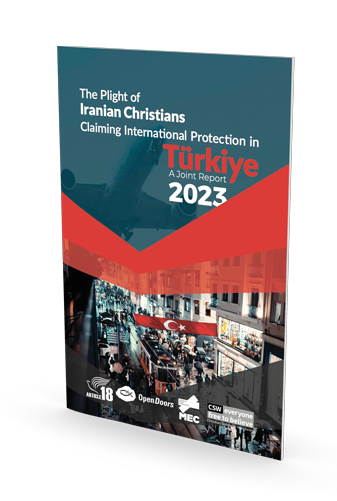
For a further overview of the situation of Iranian Christian refugees in Turkey, please see our recent report, The Plight of Iranian Christians Claiming International Protection in Türkiye.
Background
Iran stands as one of the world’s most notorious persecutors of Christians, consistently topping global watchlists for its violations of religious freedom. In this nation, Persian-speaking Christians find no sanctuary, prohibited from accessing the churches of Armenians and Assyrians and threatened with a decade behind bars for merely worshipping together in their own homes. Following arrest and imprisonment, many Christians flee their homeland and find fleeting refuge in neighbouring countries like Turkey, only to be met with further challenges—denied basic rights and facing the looming threat of deportation. With years spent in limbo, dreams deferred, and children’s futures uncertain, these families yearn for a safe haven. Yet, hope remains. The global community has the means to help, and we hope to be able to play our part in connecting those with means with the refugees in desperate need.

Read More…
Iran has for many years been listed among the worst countries for persecuting Christians, featuring prominently every year on Open Doors International’s World Watch List of the top 50 persecutors and the US State Department’s Countries of Particular Concern for “egregious violations of religious freedom”.
As Article18 has highlighted with the #place2worship campaign, Persian-speaking Christians have nowhere to worship collectively in Iran, being prohibited from attending the churches of the recognised ethnic Assyrian and Armenian Christians, and facing sentences of up to 10 years in prison for worshipping together in their homes in what have become known as “house-churches”.
As a desperate measure, many of these Christians have subsequently and very unwillingly said goodbye to their families and homeland and stepped into the unknown.
The most obvious route for many of them has been to end up in neighbouring countries, such as Turkey, where they have continued to suffer other forms of pressure – for example not being granted work permits or access to healthcare, while many countries that once offered a safe haven to refugees have now closed their doors even to the most legitimate seekers of asylum.
Meanwhile, since 2018 the UNHCR has delegated the responsibility of interviewing asylum seekers to the Turkish immigration service, under whose authority Iranian Christians are increasingly reporting harsh and unfair treatment.
Some, despite having had their claims approved by the UNHCR, have been refused in the second round of interviews by Turkish officials and are now at risk of deportation back to Iran.
A lot of these families left Iran when their children were very young, and many have been unable to find suitable schools for their children and have spent the past five, six or even seven years just desperately hoping they will soon be relocated to another country.
Meanwhile their hopes, aspirations and livelihoods have been negatively impacted.
And all the while, it is clear that there are so many individuals and churches worldwide that would be willing to help if only they were provided with credible information from organisations with insight and verifiable data.

What rights do refugees have in Turkey?
Asylum-seekers and refugees in Turkey have several rights and obligations under the The Law on Foreigners and International Protection (LFIP), such as:
- Right to non-refoulement: No-one shall be sent back to a country where they face persecution, torture, or inhuman treatment. Turkey cannot send anyone back to a country where they might face serious danger, such as persecution based on one’s race, religion, nationality, political opinion, or membership of a specific social group. This also includes protection from torture or inhuman treatment.
- Right to access basic services: This includes access to education, healthcare, and social assistance.
- Education: Asylum-seekers and refugees and their children have the right to access primary and secondary education in Turkey. They can also participate in vocational training courses and higher education, subject to certain requirements.
- Healthcare: They also have the right to access public healthcare services in Turkey, including emergency care, routine healthcare, and maternal and child healthcare.
- Right to temporary accommodation: Asylum-seekers and refugees are provided with temporary accommodation in reception and accommodation centres while their initial applications are processed. These centres offer shelter, food, and basic services to help refugees adjust to life in Turkey.
- Social assistance: Depending on refugees’ circumstances, they may be eligible for social assistance programmes, such as cash assistance, food, clothing, and other support provided by the government or NGOs.
- Right to work: The right to work for refugees and asylum-seekers in Turkey is guaranteed under Article 89, which allows refugees and asylum-seekers to apply for a work permit issued by the Ministry of Labour and Social Security. The application must include the following documents:
- A valid residence permit
- A valid passport
- A job offer or contract from a Turkish employer
- A tax identification number (Vergi Kimlik Numarası)
What are the primary challenges facing Iranian Christian refugees in Turkey?
Iranian Christian refugees face numerous challenges, ranging from uncertainty in the asylum process, to issues related to employment, access to medical services, social discrimination, and the threat of deportation. These challenges not only affect their daily lives but also jeopardise their future. By clicking on the link below, you can read more about the main challenges faced by Iranian Christian refugees in Turkey.

Recommendations
We have made the following recommendations to the UNHCR, Turkish authorities and refugee-receiving governments:
- The Turkish immigration authorities should clarify the application procedure, providing a timeline within which claims will be processed, and undertake and illustrate due diligence in assessing refugee claims, including those of Iranian Christians;
- Turkey should provide access to basic healthcare beyond the first year of registration for protection, and regulate and facilitate employment opportunities for refugees, thereby ending exploitation in the workplace;
- Refugee-receiving governments should provide resettlement opportunities and develop sponsorship programmes to expedite the resettlement process for Iranian Christians and other refugees in Turkey.
- The UNHCR must ensure the resettlement process is transparent, and intervene swiftly to assist refugees and asylum-seekers who are in imminent danger of refoulement;
FAQ
Can non-governmental organisations and institutions change the living conditions of Persian-speaking Christian refugees and asylum seekers?
Various organisations and NGOs provide support to refugees and asylum-seekers in Turkey. These organisations can offer legal advice, help with the asylum application process, and provide assistance in accessing basic services. Some of these organisations include:
- UNHCR Turkey: The United Nations High Commissioner for Refugees (UNHCR) works closely with the Turkish government to provide support and protection to refugees and asylum-seekers in the country.
- ASAM: The Association for Solidarity with Asylum-Seekers and Migrants (ASAM) is a prominent NGO in Turkey that offers various services such as legal counselling, psychological support, and social assistance to refugees and asylum-seekers.
- Refugee Rights Turkey: Refugee Rights Turkey is an independent NGO that provides legal assistance, information, and guidance to refugees and asylum-seekers in Turkey.
- Social assistance: Depending on your circumstances, you may be eligible for social assistance programmes, such as cash assistance, food, clothing, and other support provided by the government or NGOs.
CAN HUMAN RIGHTS ORGANISATIONS, E.G. ARTICLE18, OR OTHER NGOS PROVIDE SPONSORS AND FACILITATE RESETTLEMENT?
While it is the responsibility of the UNHCR or Turkish authorities to assess asylum claims, NGOs such as Article18 can help to provide letters of recommendation regarding resettlement in cases where an individual’s rights violations in Iran are well-documented. If you would like to be considered for this provision, please fill out our “Report an Incident” form.
For more information about “How do I know if I have a resettlement case?” and “Who makes the final decision on my case for resettlement?” please visit this link.
I have been recognised by the UNHCR as a refugee, can the Turkish government ignore the UNHCR’s decision and issue my deportation?
States establish their own procedures of how to examine and determine the status of asylum applications. In countries where there is a national asylum procedure, including Turkey, the UNHCR is not primarily responsible but may offer advice and technical support. The UNHCR will only assume responsibility when a state is not a party to the 1951 Refugee Convention or does not have a fair and efficient national asylum procedure in place.
The immigration services in my host country claim that there is no persecution of Christians in Iran, how do I respond to that?
Can Article18 help me if I wasn’t persecuted in Iran but am an Iranian Christian who fears persecution if deported back to Iran?
Article18 is unable to provide individual support to those without documentation regarding the rights violations they experienced inside Iran. However, we hope that our reports can provide assistance for asylum-seekers and their lawyers looking to prove that Christians in Iran are at real risk of persecution – a fact accepted by the UK’s Home Office, among others.
HOW YOU CAN HELP
Traditionally, many refugees have been relocated to safe countries through the UN mechanism, but this system has been paused in the past few years, and now only a small percentage of those relocated are Iranians, and an even smaller percentage are Iranian Christians.
This means that there are few clear prospects for these Christians to be relocated. But one of the very few options available for them is to be accepted with a refugee-sponsorship visa to a country like Canada. The United States also recently created a similar scheme, based on the Canadian model.
In Canada, an organisation, charity or group of individuals can apply to become a Sponsorship Agreement Holder (SAH). Once they have this licence, the SAH can sponsor refugees for the first year of their relocation to Canada, which means providing for their housing and other expenses while they learn the language and are familiarised with their new context.

ADOPT A PERSECUTED REFUGEE
In this section, there are a few examples of Iranian Christian refugees currently stuck in Turkey, whose cases Article18 has documented. Article18 has been asked to advocate for these individuals, and would love to invite you to consider “adopting” one of them – and committing to pray for them, write to them, and seek to support them in their resettlement journey.
Coming Soon
IMPACT STORIES
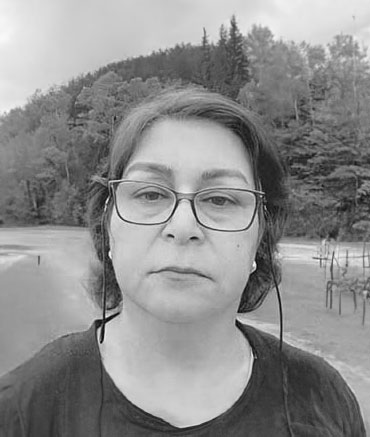
Fariba
Fariba Nazemianpour
I spoke with a Christian brother about my refugee status and that of my family. He gave me information about migrating to Canada through sponsorship. Until that day, I had no knowledge of this path. Through this brother, I became acquainted with another Christian in Canada who, with great effort, managed to find a sponsor for me and my family. To communicate with the sponsor and fill out the specific forms, we or one of our close relatives needed to be good at English.
How you can help
Traditionally, many of these refugees have been relocated to safe countries through the UN mechanism, but this system has been paused in the past few years, and now only a small percentage of those relocated are Iranians, and an even smaller percentage are Iranian Christians.
This means that there are few clear prospects for these Christians to be relocated. But one of the very few options available for them is to be accepted with a refugee-sponsorship visa to a country like Canada.
Practically, this means that an organisation, charity or group of individuals can apply to become a Sponsorship Agreement Holder (SAH). Once they have this license, the SAH can sponsor refugees for the first year of their relocation to Canada, which means providing for their housing and other expenses while they learn the language and are familiarised with their new context.
What does the sponsorship entail?
The sponsorship is for one year, and costs roughly 16,000 Canadian dollars per person, with a reduced per-person rate for families.
Wonderfully, some families and individuals have already made their way to Canada through this scheme, but many others are stuck in Turkey because no church knows about them or have heard their stories.
Our role
In response to this need, Article18 has compiled nearly 100 briefings of families and individuals stranded in Turkey.
Article18 has been asked to help them find potential homes in churches and communities that are willing to accept them.
So if you are a leader or member of a church or SAH in Canada, please contact us and we’ll be more than happy to introduce you to a family in need.
What if you don’t live in Canada?
There is also opportunity for individuals, organisations and churches outside Canada to contribute to this process, as some licence-holders in Canada have the willingness to help but are short of finances.
Article18 could help coordinate this multilateral relief operation by connecting sources of funding with churches and individuals in need.
There have already been examples of churches in Canada offering their licence to relocate some individuals, with churches in other countries being willing to undertake the financial commitment.
Again, if you can help in this regard, please don’t hesitate to contact us.
What are the refugees’ primary needs?
1. Financial support
A lot of the refugees we have interviewed feel a double vulnerability to the worsening economic situation both in their home countries and their country of transit.
For example, Turkey has registered 22% inflation at the end of 2021, which has made life difficult for most Turkish citizens and even worse for the large population of refugees in this country, who have no permission to work.
We know of some individuals who have been forced to survive on only one simple meal a day.
There are churches and organisations in Turkey dedicated to help alleviate this pressure, and these churches would also be very happy to be assisted by donations from individuals and organisations that are willing to help. Again, while Article18 is not directly involved in these relief projects, we would be only too happy to connect those who would like to help in this regard with churches and refugees in Turkey. Please contact us if you can help.
2. Healthcare provision
Developing an illness that requires long-term medical care is unfortunately a common occurrence in the life of refugees living in harsh conditions.
We know of individuals who have fled their country hoping for a safer life, but while stranded in Turkey have been diagnosed with multiple sclerosis, cancer, or a heart condition.
Receiving proper care has become a serious challenge to these individuals, and has brought many of them to the verge of disillusionment.
Identifying the people most in need is not difficult when working with and through local churches, especially now there are Iranian churches or fellowships in almost every major Turkish city. Again, please contact us to find out more.
3. Children’s education
In years gone by the length of stay for some refugees in Turkey was around two or three years. But now it is not uncommon for people to have to stay for seven years, or even longer.
We know of one Christian convert who spent over six years in prison in Iran, whose children have not been able to attend school and continue their education properly in Turkey, although they’ve proven to be very gifted and intelligent learners.
And while this family still await a breakthrough in their situation, the children sink into depression, putting even more stress on their parents, who begin to feel that their commitment and faithfulness to their Christian faith was the cause of their children’s gloomy future.
Perhaps the challenge for well-established churches or Christian organisations could be to think about setting up an online school or even possibly university education for the children of refugees, so they are better equipped to contribute positively to the countries they will be relocated to in the future, while at the same time easing the pressure on their parents and giving hope to the children.
Offering free online courses would be a practical and life-changing step. Please contact us if you think you can help in this regard.
4. Trauma care
Finally, any crisis of this level calls for persistent and professional care, especially when there have been multiple traumas: from the initial arrest and imprisonment, to fleeing the country under difficult and uncertain circumstances, and then living a life of uncertainty in countries of transit where refugees often face prejudice and exclusion.
While localchurches can offer a level of care and spiritual input, some deeper wounds of trauma call for more professional intervention, perhaps from a qualified Christian counsellor who could commit to support a refugee with a medium-to-long-term course of treatment. Once again, if you can help in this regard, please don’t hesitate to contact us.
The situation for Iranian Christian refugees is bleak on many levels, but perhaps together we can begin to lift the gloom.
LATEST NEWS AND UPDATES
#wplp_widget_14045 .wplp_listposts li .img_cropper:before {background-color: rgba(50,50,60,0.2);}#wplp_widget_14045 .wplp_listposts li .img_cropper:hover:before {background-color: transparent;}#wplp_widget_14045 .wplp_listposts li{
width: calc((100% – 40px)/3);}@media screen and (max-width: 640px) {#wplp_widget_14045 .wplp_listposts li {width: calc(100% – 40px) !important;}}
-
 NewsAsylum-seekers who convert in EU can’t be automatically…EU countries have been told they cannot automatically reject asylum claims based on professed conversions […]1 March 2024View
 -
NewsIranian Christian refugees in Turkey no longer eligible…Iranian Christians in Turkey are no longer eligible for resettlement to the US as part […]10 January 2024View
-
FeaturesIranian Christian refugee pens poem about pain of…The daughter of an Iranian Christian couple who fled Iran to claim asylum in Turkey […]13 November 2023View
-
FeaturesIranian Christian refugees resettled in Canada longing to…An Iranian Christian couple recently resettled in Canada have spoken of their longing to finally […]4 October 2023View
-
AnalysisChallenges remain despite UK’s fast-tracking of Iranian asylum-seekersThe director of an organisation that supports refugees in the UK, including Iranian Christians, has […]23 August 2023View
-
NewsIranian Christian refugees in Sweden share frustrations at…Over the past three years, Article18 has reported on numerous occasions about a group of […]22 June 2023View
-
NewsIranian Christian asylum seekers caught up in Turkey’s…Article18 has received firsthand testimonies from five Iranian Christian refugee families who have been arrested […]27 January 2023View
-
AnalysisUK courts grapple with church leaders’ expertise in…How much weight should be given to the testimony of church leaders in assessing the […]4 November 2022View
-
NewsIranian Anglican minister resettled in US after threat…An Iranian Anglican minister and his family, who had been threatened with deportation from Turkey, […]31 October 2022View


پناهندگان و مهاجران
این صفحه برای یاری رساندن و ارائه اطلاعات به پناهندگان و پناهجویان مسیحی ایرانی و کسانی که از آنها حمایت میکنند، ایجاد شده است و به حقوق، چالشها و نیازهای اصلی آنها میپردازد. در این صفحه ما بر کشور ترکیه تمرکز داریم، زیرا اکثریت قریب به اتفاق مسیحیان ایرانی پس از گریز از ایران به ترکیه پناه میبرند. ما البته آگاهیم که برخی از پناهندگان مسیحی ایرانی نیز در کشورهای گوناگونی مانند ارمنستان، گرجستان یا یونان ساکن هستند و امیدواریم اطلاعات ارائه شده در این بخش، برای آنها نیز مفید باشد. برای دریافت اطلاعات بیشتر در مورد وضعیت پناهندگان و پناهجویان مسیحی ایرانی در ترکیه، لطفاً گزارش اخیر ما، به نام «رنجهای مسیحیان ایرانی که در ترکیه برای حمایت بینالمللی اقدام میکنند»، را مطالعه بفرمایید (این گزارش به زبان انگلیسی است).
لازم به ذکر است، سازمان ماده۱۸ هیچ فردی را تشویق به خروج از کشور و اعلام پناهندگی نمیکند، زیرا پناهندگی نیز چالشهای بسیاری به همراه دارد. ولی به عنوان یک سازمان حقوق بشری، وظیفه خود میدانیم که به گردش آزاد اطلاعات کمک کرده و اطلاعات لازم را در اختیار پناهجویان قرار دهیم تا آنها بتوانند برای آینده خود بهتر تصمیم بگیرند.

پناهنده کیست؟
در سالهای گذشته تقاضای پناهندگی از سوی ایرانیان افزایش چشمگیری داشته است. مهاجران، به ويژه مهاجران اقتصادی، به ميل خود جا به جا می شوند تا چشمانداز زندگی خود و خانواده خود را بهبود ببخشند. اما پناهندگان به خاطر نجات جان خود و حفظ آزادیشان ناچارند از جایی به جای دیگر بروند تا از شکنجه و آزار در امان بمانند.
براساس ماده ۱ کنوانسیون ژنو سال ۱۹۵۱ و همچنین پروتکل الحاقی آن در سال ۱۹۶۷، «پناهنده» به فردی اطلاق میشود كه «به علت ترس موجه از شكنجه و آزار براساس نژاد، دین، مليت، عضويت در گروههای اجتماعی مشخص، و يا عقايد سياسی، از كشور خود خارج شده (فرار كرده) و قادر به بازگشت به كشور خود نيست.» در کشورهای پناهندهپذیر، اگر فردی بتواند ثابت کند که در این تعریف قرار میگیرد به عنوان پناهنده به رسمیت شناخته خواهد شد.
«پناهجو» نیز به شخصی گفته میشود که از کشوری بیگانه درخواست حفاظت و حق اقامت به عنوان یک پناهنده را مینماید و در انتظار تصمیم گیری در رابطه با وضعیت خود تحت مقررات داخلی و بین المللی است.
با توجه به اینکه مستندات بسیار و مورد تایید نهادهای بینالمللی وجود دارد که حکومت ایران، حقوق اقلیتهای دینی به ویژه نوکیشان مسیحی را پایمال میکند، و حضور آنها در جامعه ایران را بر نمیتابد، پس میتوان تصور کرد که این پناهندگان، در صورت بازگشت به ایران، مجبور خواهند شد در شرایط سختی زندگی کنند، مورد آزار قرار خواهند گرفت و حقوق آنها نقض خواهد شد. این افراد حتی اگر تحت پیگرد قانونی قرار نگیرند مجبور خواهند شد در خفا به باور مسیحی خود بپردازند. در غیر این صورت، اگر بخواهند که آزادانه به باورهای خود عمل کنند به سرنوشت مسیحیانی دچار خواهند شد که سازمان ماده ۱۸، در همکاری با سایر سازمانهای حقوق بشری در گزارشهای گوناگون در مورد پیامدهایی چون زندان، شکنجه و تبعید آنها نوشته است.
اسکان در کشور ثالث چیست؟
روند اسکان پناهندگان مشروط در کشوری که آنها را پذیرفته و به مدت نامحدود به آنها حق اسکان داده، در اصطلاح «اسکان در کشور ثالث» نامیده میشود. این روند طولانی با دریافت عنوان پناهنده مشروط آغاز میشود. اسکان در کشور ثالث راه حلی است که در چارچوب آن پناهندگان آسیبپذیر میتوانند از کشوری که به آن پناهنده شدهاند به کشور دیگری فرستاده شوند که در آنجا به حفاظت و کمک مورد نیاز برای رفع احتیاجات ویژه خود دسترسی داشته باشند. به عنوان مثال، در کشور ترکیه که بسیاری از پناهندگان ایرانی را در خود جای داده، این روند با همکاری مشترک اداره کل مهاجرت ترکیه، وابسته به وزارت کشور، و کمیساریای عالی پناهندگان سازمان ملل UNHCR اجرا و مدیریت میشود. گرفتن عنوان پناهنده مشروط، بر اساس کنوانسیونهای بینالمللی امضا شده توسط ترکیه و نیز قوانین داخلی ترکیه، لزوما به این معنی نیست که فرد پناهنده حتما در یک کشور ثالث اسكان داده خواهد شد.
در محدوده اسکان در کشور ثالث، کشورهایی که پناهنده میپذیرند، همه ساله فقط تعداد بسیار محدودی سهمیه اسکان تعیین و اعلام میکنند. تعداد بسیار کمی از پناهندگان از معیارهای تعیین شده برای اسکان در کشورهای ثالث برخوردار هستند. این معیارها توسط کمیساریای عالی پناهندگان سازمان ملل تعیین نمیشود، بلکه توسط کشورهایی که برای پذیرش پناهنده اعلام آمادگی میکنند، تعیین و اعلام میشود. در نتیجه این امر نیز تنها حدود یک درصد از کل پناهندگان در جهان میتوانند در یک کشور ثالث اسكان داده شوند. در حال حاضر ترکیه بیشترین تعداد پناهندگان و پناهجویان در جهان را در خود جای داده است. آمار پناهندگان در ترکیه سه میلیون و هفتصد هزار نفر است.
چالشهای مهم پناهندگان مسیحی ایرانی در ترکیه
پناهندگان، به ویژه مسیحیان ایرانی، با چالشهای فراوانی در ترکیه روبرو هستند. از بلاتکلیفی در فرآیند پناهندگی گرفته تا مسائل مربوط به کار، دسترسی به خدمات درمانی، تبعیضات اجتماعی، و تهدیدهای اخراج از کشور. این چالشها نه تنها به زندگی روزمره آنها تأثیر میگذارد بلکه آیندهی آنها را نیز در معرض خطر قرار میدهد. در این متن، به بررسی چالشهای اصلی پناهندگان مسیحی ایرانی در ترکیه پرداختهایم.
توصیههایی برای حمایت از مسیحیان ایرانی
ما در گزارش اخیر خود، توصیههای زیر را به کمیساریای عالی سازمان ملل در امور پناهندگان، مقامات ترکیه و دولتهایی که پناهندهپذیر هستند، ارائه کردهایم:
- مقامات ادارهی مهاجرت ترکیه باید روند درخواست پناهندگی را روشن سازند، بازه زمانی مشخصی برای پردازش درخواستها ارائه دهند و دقت و مسئولیتپذیری لازم را در ارزیابی درخواستهای پناهندگی، از جمله درخواستهای مسیحیان ایرانی، به نمایش بگذارند.
- ترکیه باید دسترسی به خدمات بهداشتی و درمانی اولیه را پس از سال اول ثبت درخواست برای پناهندگی فراهم کند و فرصتهای شغلی را برای پناهندگان تنظیم و تسهیل نماید، و به این وسیله به استثمار و بهرهکِشی در محیط کار پایان دهد.
- دولتهایی که پناهندگان را میپذیرند باید فرصتهای اسکان مجدد و برنامههای حمایتی را فراهم کنند تا فرآیند اسکان مجدد برای مسیحیان ایرانی و سایر پناهندگانی که در ترکیه هستند سرعت یابد.
- کمیساریای عالی سازمان ملل در امور پناهندگان باید اطمینان حاصل کند که فرآیند اسکان مجدد شفاف باشد و به سرعت برای کمک به پناهندگان و پناهجویانی که در خطر فوری بازگشت اجباری (اخراج) قرار دارند، اقدام کند.
پرسشهای متداول
آیا سازمانها و نهادهای غیردولتی میتوانند شرایط زندگی پناهندگان و پناهجویان مسیحی فارسیزبان را تغییر دهند؟
سازمانها و نهادهای غیردولتی گوناگونی از پناهندگان و پناهجویان در ترکیه حمایت میکنند. این سازمانها میتوانند مشاوره حقوقی ارائه دهند، در فرآیند درخواست پناهندگی کمک کنند و برای دسترسی یافتن به خدمات اساسی کمک نمایند. برخی از این سازمانها عبارتند از:
- کمیساریای عالی سازمان ملل متحد برای پناهندگان در ترکیه: کمیساریای عالی سازمان ملل متحد برای پناهندگان (UNHCR) به طور نزدیک با دولت ترکیه همکاری میکند تا حمایت و حفاظت از پناهندگان و پناهجویان در این کشور را فراهم آورد.
- ASAM: انجمن همبستگی با پناهجویان و مهاجران (ASAM) یک سازمان غیردولتی برجسته در ترکیه است که خدمات مختلفی مانند مشاوره حقوقی، پشتیبانی روانشناختی و کمکهای اجتماعی به پناهندگان و پناهجویان ارائه میدهد.
- حقوق پناهندگان ترکیه: حقوق پناهندگان ترکیه یا Refugee Rights Turkey یک سازمان غیردولتی مستقل است که خدمات حقوقی، اطلاعات و راهنماییهای لازم را به پناهندگان و پناهجویان در ترکیه ارائه میدهد.
- کمکهای اجتماعی: با در نظر گرفتن شرایط شما، ممکن است شما واجد شرایط برنامههای کمک اجتماعی باشید، مانند کمک نقدی، غذا، پوشاک و سایر حمایتها که توسط دولت یا سازمانهای غیردولتی ارائه میشوند.
آیا سازمانهای حقوق بشری، مانند ماده ۱۸ و غیره یا دیگر سازمانهای غیر دولتی میتوانند اسپانسرها یا حامیانی فراهم کنند و در اسکان مجدد کمک کنند؟
ارزیابی درخواستهای پناهندگی، وظیفه کمیساریای عالی سازمان ملل متحد برای پناهندگان UNHCR یا مقامات ترکیه است، سازمانهای غیردولتی مانند ماده ۱۸ میتوانند در مواردی که نقض شدن حقوق فرد در ایران به خوبی مستند شده باشد، با ارائه توصیهنامههایی در فرآیند اسکان مجدد کمک کنند. اگر مایلید برای این امکان در نظر گرفته شوید، لطفاً فرم «گزارش جفا و آزار دینی» ما را پر کنید.
برای کسب اطلاعات بیشتر در مورد پرسشهایی مانند «چگونه بدانم که آیا من یک پرونده اسکان مجدد دارم؟» و «چه کسی تصمیم نهایی در مورد پرونده اسکان مجدد من را میگیرد؟»، لطفاً به این پیوند مراجعه کنید.
من توسط کمیساریای عالی سازمان ملل متحد برای پناهندگان UNHCR به عنوان پناهنده شناخته شدهام، آیا دولت ترکیه میتواند تصمیم UNHCR را نادیده بگیرد و دستور اخراج من را صادر کند؟
کشورها روندها و پروسههای خود را برای تعیین وضعیت پناهندگی دارند و UNHCR نیز نقش خود را در حمایت از پناهندگان و پناهجویان ایفا میکند. تصمیم UNHCR ممکن است بر ارزیابی دولت ترکیه تأثیر بگذارد، اما نهایتاً تصمیم در مورد پذیرش یا رد درخواست پناهندگی توسط مقامات ترکیه گرفته میشود. اگر دولت ترکیه تصمیم به اخراج یک فرد بگیرد، فرد میتواند درخواست بازنگری کند و یا از حقوق و حمایتهای دیگری که تحت قانون بینالمللی در دسترس هستند، استفاده کند.
توصیه میکنیم برای کسب مشاوره و راهنمایی دقیق در مورد وضعیت خاص خود، با یک مشاور حقوقی تماس بگیرید.
اداره مهاجرت کشور میزبان من ادعا میکند که در ایران آزار دینی و اذیتی علیه مسیحیان وجود ندارد، چطور باید به این موضوع پاسخ دهم؟
لطفاً به وبسایت ماده ۱۸ مراجعه کنید تا بتوانید از مستندات ما در زمینهی نقض حقوق مسیحیان در ایران، از جمله آخرین گزارش سالانه ما در این زمینه استفاده کنید.
اگر من در ایران مورد تعقیب قضایی و آزار دینی قرار نگرفته باشم اما در صورت اخراج به ایران به عنوان یک مسیحی ایرانی از مورد آزار قرار گرفتن و تعقیب قضایی بترسم، آیا ماده ۱۸ میتواند به من کمک کند؟
سازمان ماده ۱۸ نمیتواند به افرادی که مستنداتی در مورد نقض حقوق خود در ایران ندارند، پشتیبانی فردی ارائه دهد. با این حال، امیدواریم که گزارشهای مستند ما بتوانند به پناهجویان و وکیلهایشان کمک کرده تا ثابت کنند که مسیحیان در ایران واقعاً در معرض خطر آزار دینی و تعقیب قضایی هستند. وزارت کشور بریتانیا و کشورهای دیگر نیز این موضوع را پذیرفتهاند.
آخرین اخبار و گزارشها
روایتها و پیشنهادات پناهندگان

فریبا ناظمیانپور
من با یکی از برادران مسیحی در مورد شرایط پناهندگی خود و خانوادهام صحبت کردم. او به من اطلاعاتی در مورد مهاجرت به کانادا از طریق اسپانسری داد…

همایون شکوهی غلامزاده
ما فقط برای پناهندگان دعا نمیکنیم بلکه در حد توانمان قدمهای عملی برمیداریم. به طور نمونه با هیئت رهبری کلیسایی که اطلاعی از راه اسپانسری نداشت…

ایمان غزنویان
از آغاز پرکردن فرمهای اسپانسری کانادا تا روز پروازم حدود ۴ سال طول کشید. زیرا در دوران همهگیری ویروس کرونا و پس از آن، پناهندگان اوکراینی و افغانستانی در اولویت قرار گرفتند…

حکمت سلیمیسعدی
در ایران به دلیل مسیحیت و فعالیتهای کلیسایی، تجربهی چهار بار زندان و جفا از سوی حکومت را داشتم، با اینوجود پلیس ترکیه پرونده ما را رد کرد و حکم دیپورتی (اخراج) برای من و خانوادهام صادر کرد…
فرم حمایت از پناهندگان و پناهجویان
سازمان «ماده۱۸» با هدف حمایت از پناهندگان و پناهجویان مسیحی که در ایران قربانی نقض حقوق بشر بر اساس ماده ۱۸ اعلامیه جهانی حقوق بشر (مربوط به آزادی دین و عقیده) شدهاند، فعالیتهای هر چند محدود میکند.
به همین منظور ، از افرادی که در ایران به دلیل فعالیتهای مسیحی خود بازداشت (بیش از ۲۴ ساعت) یا زندانی شدهاند، و یا احکام قضایی (حبس، تبعید، جریمه، محرومیت اجتماعی، شلاق، … ) دریافت کردهاند، دعوت میکنیم تا با پر کردن فرم پیش رو، مسائل و چالشهای خود را به ما اطلاع دهند.
ما تلاش میکنیم تا در زمینههای همچون فراهم آوردن مشاوره حقوقی در صورتی وجود خطر دیپورت، هزینههای ضروری درمانی، دسترسی به روان درمانگر، و دیگر فعالیتهای حمایتگرانه از آنها پشتیبانی کنیم.
به علاوه تلاش خواهم کرد تا در ارتباطات سازمان ماده۱۸ با نهادهای بینالمللی، کلیساهای با قابلت اسپانسرشیب (حامی) و دیگر سازمانهای موثر و خوش نام، برای احقاق حقوق و آزادیهای آنها قدمهایی برداریم.